Transforming Carer Support in Hospitals
What we’ve learned from the Carer Support Worker pilot project in North East London.
Across North East London, thousands of unpaid carers play a vital role in helping loved ones return safely home from hospital. Yet too often, they go unrecognised, unsupported, and unseen.
The Carer Support Worker (CSW) pilot was funded through the Department of Health and Social Care’s (DHSC) Accelerating Reform Fund (ARF) and led by Newham Council on behalf of North East London boroughs. Care City acted as the independent evaluator for the programme, helping capture learning, impact and opportunities for future development.
The pilot explored how earlier identification and support for unpaid carers during hospital discharge could improve experiences and strengthen connections into ongoing community support.
A new approach: finding and supporting carers earlier
This programme was designed to meet key ARF priorities: identifying carers earlier, improving hospital discharge, and strengthening connections between health and community support.
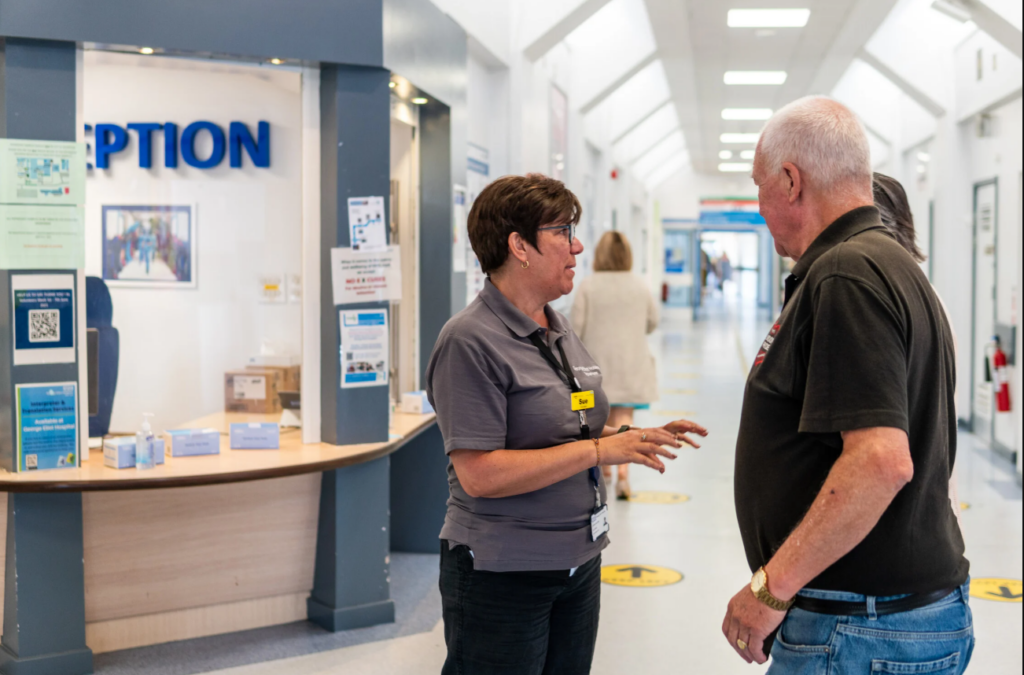
At the heart of this project was the introduction of a new role across North East London, with Carer Support Workers embedded in acute hospitals. This brought a proactive, in-hospital approach to identifying and supporting carers that had not previously existed at scale.
- A proactive, human-first approach to identifying carers at the bedside of those they support
- A direct bridge between hospital and community support
- A way to reach “hidden carers” earlier in their caring journey
Unpaid carers are often not identified in hospital settings and lack timely access to support. This pilot set out to close that gap.
What the programme has achieved so far
Over 12 months, the impact has been significant:
- 1,335 carer engagements in acute hospitals
- 671 referrals into local carer support services
- ~40% identified as eligible for Care Act assessments
- Between July and December 2025, 20% of all referrals to local carer charities across North East London came via CSWs
This is more than activity, it’s a system change. For the first time, carers are being consistently identified and connected into support pathways early.
The human impact: stories behind the numbers
Behind every data point is a person navigating uncertainty, responsibility and often emotional strain.
“Carers often feel lonely and need someone to talk to. I was very grateful every time I spoke with my carer’s support worker- she understood, did not judge me, and was so supportive”
Carers consistently describe the service as a lifeline during some of their most difficult moments .
Case study: Margaret
Margaret became a carer overnight when her father was hospitalised.
- She didn’t realise she was a carer until speaking with a CSW
- She was proactively identified on the ward
- She gained confidence in navigating care, legal processes, and next steps
- She is now connected into ongoing community support
“It wasn’t a case of me reaching out, they reached out and found me… it was just nice to know someone was there.”
This proactive approach is one of the defining strengths of the model.
What carers told us
Feedback from carers has been overwhelmingly positive:
- 86% said the CSW made their hospital experience more positive
- 87% felt their questions were answered or they were guided to support
- 87% felt respected and understood
- 75% felt more confident supporting their loved one after discharge
Crucially 38% didn’t know they were carers before speaking to a CSW.
This highlights the service’s unique role in identifying “hidden carers” early in their journey.
What we’ve learned
1. Early identification changes everything
Finding carers earlier allows support to begin before discharge, improving outcomes for both carers and patients.
2. Hospitals and communities work better together
The CSW role creates a practical bridge between acute care and local support services, breaking down silos.
3. Community organisations are essential partners
Locally commissioned carer support charities bring deep expertise, local knowledge, and trusted relationships.
4. This is prevention in action
By supporting carers early, the service helps reduce escalation, crisis, and potential readmissions.
Strategic impact
The pilot directly supports the NHS’s major shifts: Hospital → Community: strengthening safe discharge pathways and Treatment → Prevention: identifying and supporting carers earlier in their journey.
It also contributes to the wider ambition of a more connected system by strengthening links between hospital and community-based support, helping to bridge gaps between health and social care.
In doing so, it demonstrates how neighbourhood-level services can play a central role in system transformation.
Looking ahead
The strongest message from this pilot is simple: the function this role provides works.
By creating a consistent, proactive referral route within acute settings, the Carer Support Worker role has:
- Improved identification of carers
- Strengthened connections into community support
- Enhanced carers’ experience at a critical point in their journey
It has also addressed a long-standing gap in hospital settings, where carers have historically been overlooked, and where no clear mechanism has existed to routinely identify and support them.
At the same time, the pilot has highlighted opportunities to build on this foundation.
Some of the challenges encountered, such as visibility within hospitals, role clarity, and access to systems, reflect the reality of introducing a new, cross-sector role into complex clinical environments .
These are not barriers to the model, but signals of where it can evolve.
If you’d like to learn more, get in touch. Email us at theteam@carecity.org