From 100 doors to a street coffee morning: what we’re learning about neighbourhood-led change
What does it really take to support residents to shape their own neighbourhoods? One year into Barking & Dagenham’s Neighbourhood Networks programme, we’re learning about the power of small ideas, the challenges of sharing responsibility and why the language we use matters.
Sometimes, building a stronger neighbourhood starts with something as simple as knocking on a neighbour’s door.
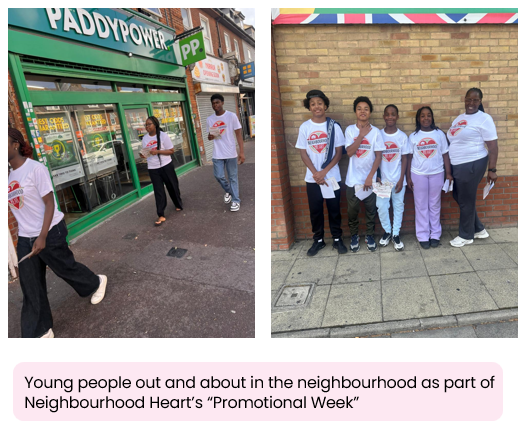
In Barking & Dagenham, one resident and her children joined a community litter pick organised through the Neighbourhood Heart network. Inspired by the experience, she attended a local “Hackathon” and came up with an idea of her own: bringing people together on her street.
She went on to knock on 100 doors. What followed was a regular outdoor coffee morning, with neighbours bringing their own chairs and getting to know one another.
It’s a wonderful example of how one small activity can spark something bigger. And it’s exactly the kind of change we’re starting to see through the Neighbourhood Networks programme.
One year of learning
Launched in September 2025, Neighbourhood Networks brings together local voluntary, community, faith and social enterprise (VCFSE) organisations to work alongside residents, supporting them to shape what happens in their neighbourhoods.
Five networks were active by the end of the programme’s first year, each bringing together local organisations and residents to build connections, develop ideas and strengthen communities.
As a learning partner, Care City has been working alongside BD Collective and the networks to understand what’s happening, what’s working and what needs to change.
Our latest learning summary, covering June to September 2026, highlights an important shift: from organisations delivering activities for residents, towards residents creating opportunities and supporting one another.
But making that shift isn’t always straightforward. And some of the most valuable learning comes from the questions and challenges it raises.
What are we learning?
Support works best when it matches residents’ own pace
Being given the opportunity to lead an activity, or even £100 to bring an idea to life, can feel intimidating for someone who’s never had that responsibility before. What might seem like a small amount of money to an organisation can feel like a big commitment to a resident, bringing with it pressure to get things right.
Networks are learning that building confidence takes time, and that programme timescales don’t always match the pace at which residents feel ready to try something new.
An important part of the support is helping residents develop a learning mindset, where ideas don’t have to be perfect or successful first time. It’s about starting small, trying things out, seeing what happens and building from there.
As one network member reflected:
“It’s important to try lots of small quick ideas, then build from them.”
Neighbourhoods are defined by people’s lives, not council boundaries or programme terms
What makes someone a local resident? Does it matter if they live just outside a borough boundary but spend much of their time in the neighbourhood?
These are real questions networks are grappling with, alongside whether the language used by organisations reflects how people actually talk about their communities.
One network member put it rather brilliantly:
“The word ‘hyperlocal’ makes no sense – it’s a funding buzzword, not created by someone who lives locally.”
The learning? We need to describe neighbourhood working in ways that mean something to residents. A ‘£100 giveaway’ rather than a microgrant. A street coffee morning rather than community engagement. And simply asking ‘Would you like help?’ rather than talking about capacity building.
Supporting residents to lead takes more resources than expected
As activities become more resident-led, the role of the organisations supporting them is changing, but the work involved doesn’t necessarily reduce. Rather than delivering activities themselves, organisations are increasingly helping residents build the confidence, skills and connections to make things happen independently, with the potential for benefits that extend well beyond any single activity.
Mentoring, coordinating, arranging venues, safeguarding and following up all take time. But we’re beginning to see the value of this investment, as residents who were initially supported to lead are now helping others to do the same.
Currently, 33% of each network’s funding is set aside for running the network, but partners are questioning whether this reflects the true cost of supporting resident-led activity.
It’s prompting an important conversation about how neighbourhood working is funded, and how we recognise and resource the role organisations play in enabling longer-term, community-led change.
Small activities are starting to build a web of relationships that create and protect health
The story of the street coffee morning isn’t an isolated example.
Residents who initially helped with a litter pick have gone on to organise activities for other families and are now supporting another resident to develop a community fête. Elsewhere, a sewing activity in one network has inspired a resident to organise something similar in another.
We’re beginning to see support flowing between residents, rather than simply from organisations to residents.
These everyday connections are helping build what the programme describes as a ‘prevention infrastructure’: relationships through which people can support one another, strengthen wellbeing and potentially prevent poor health from developing or getting worse.
Networks want to connect with neighbourhood health, but the links aren’t yet clear
There’s growing recognition that network activities, from supporting people with long-term health conditions to bringing isolated residents together, have a role to play in improving health.
But our learning sessions have also highlighted that many networks don’t yet understand how their work connects with Barking & Dagenham’s wider neighbourhood health ambitions or emerging Integrated Neighbourhood Teams.
The opportunity now is to build stronger connections between grassroots activity and local health and care partners, ensuring that residents’ knowledge and ideas can help shape wider responses to local challenges.
How we approach data needs to evolve
Networks are gathering rich stories, photographs, feedback and examples of change. But bringing this evidence together to demonstrate the programme’s collective impact remains a challenge.
We’re exploring how a small set of consistent data points might help tell a bigger story, while ensuring networks can continue to learn in ways that are useful, relevant and engaging for residents.
The challenge is to make learning part of the activity itself, rather than another reporting task.
Looking ahead to Year 2
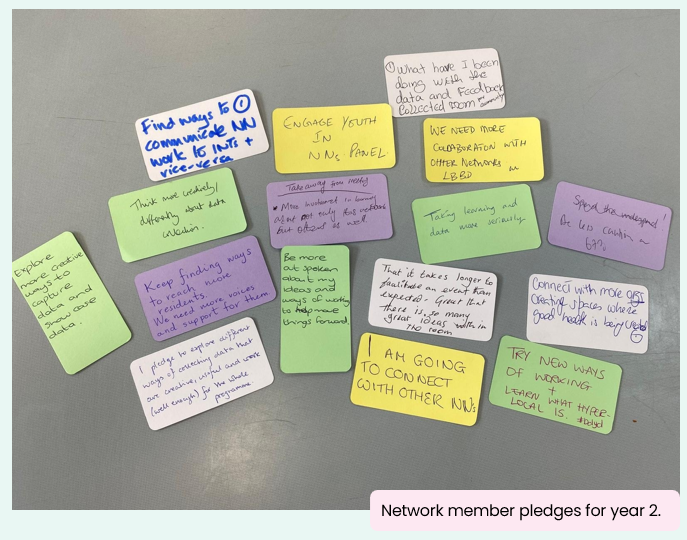
With additional networks in the process of joining, there’s an opportunity to build on what’s been learned and tackle some of the challenges together.
Priorities include reviewing how networks are funded and supported, strengthening connections with neighbourhood health, finding better ways to capture and share impact, and helping ideas and learning travel between neighbourhoods.
For Care City, this first year reinforces the importance of testing, learning and adapting alongside communities, rather than assuming we already know what works.
Because building healthier neighbourhoods isn’t just about creating more activities or services. It’s about creating the conditions for people to connect, contribute and support one another.
And sometimes, that starts with a knock on the door.
Read the full report
Read the full Neighbourhood Networks Learning Summary (June – Sept 2026) to explore the practical examples, emerging themes and honest reflections that are shaping the next phase of the programme.