
Upskilling Domiciliary Care Workers to use remote monitoring tech to help people stay healthy at home

Equipping Domiciliary care workers with a monitoring device for their clients to help prevent avoidable admissions to hospital.
Care City supported the delivery and evaluation of Kit4Care, a Devon wide pilot exploring how remote monitoring technology can be used in domiciliary care to improve early identification of deterioration, strengthen communication between social care and primary care and support people to stay well at home.
The project tested the use of remote monitoring technology (RMT) alongside workforce training to introduce objective health data into day-to-day homecare practice. By equipping care workers with tools to record vital signs and generate NEWS2 scores, Kit4Care aimed to create a shared clinical language between health and social care, enabling more timely and confident escalation of concerns.
Our role
Care City was commissioned to provide project management, implementation support and independent evaluation for Kit4Care. Drawing on our experience supporting innovation across health and social care, we worked closely with care providers, primary care partners and system stakeholders to:
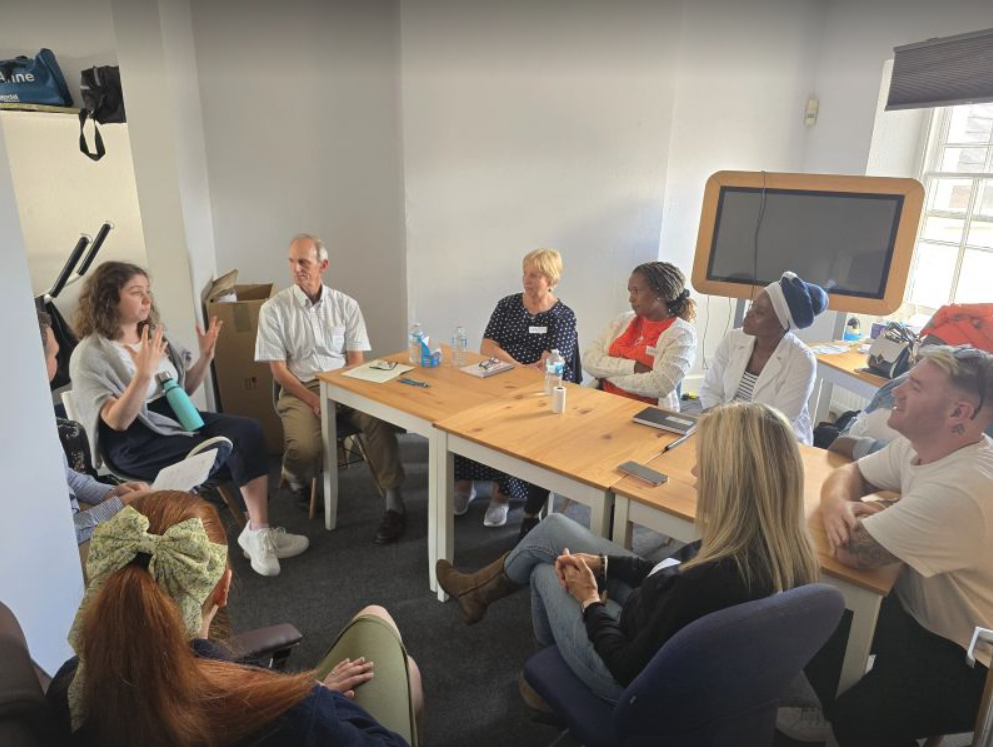
- Support co-design workshops that shaped local delivery and escalation models
- Provide implementation oversight across multiple localities
- Lead a mixed-methods evaluation assessing feasibility, impact and sustainability
- Capture learning and practical insights to inform future scale-up
Who we worked with
Kit4Care was delivered in partnership with:
- Five domiciliary care providers across four localities in Devon
- Primary Care Networks and GP practices, supporting escalation and clinical decision-making
- Whzan Digital Health, providing the Blue Box remote monitoring technology
- Adult social care and health system stakeholders involved in project governance
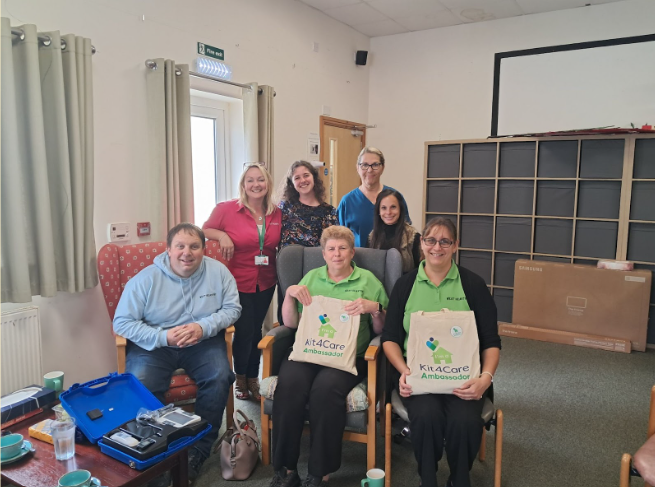
In total, 51 care staff were trained, and over 80 people receiving homecare consented to take part in the pilot.
What was tested
The project combined:
- RESTORE2 training to support early recognition of deterioration
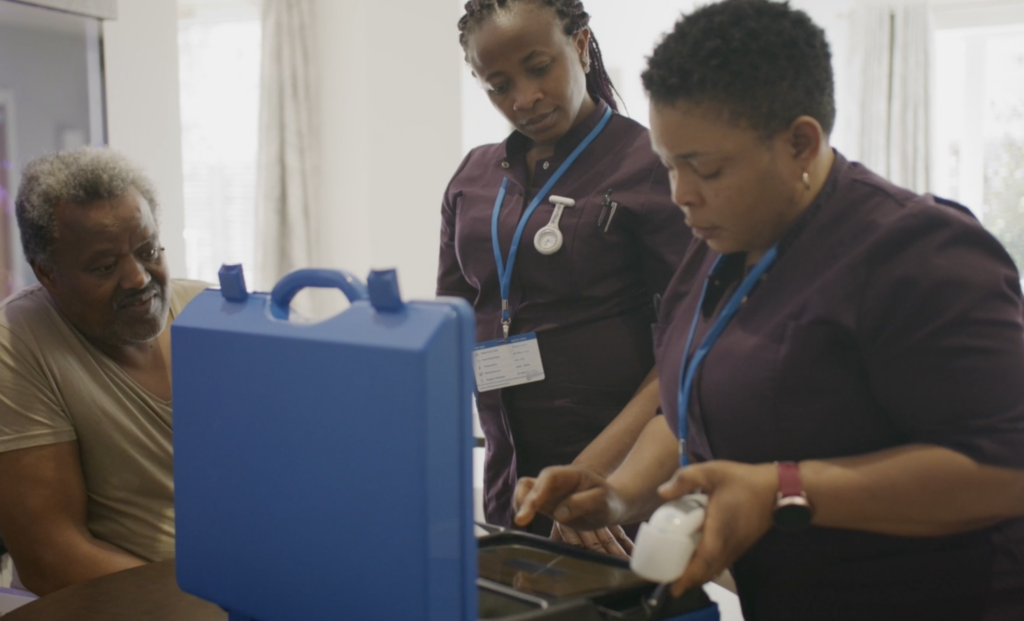
- Whzan Blue Box remote monitoring technology, enabling care staff to record vital signs and generate NEWS2 scores
- Locally agreed escalation pathways, co-designed with primary care
The approach focused on preventative care, supporting earlier action before deterioration leads to emergency escalation or hospital admission.
Impact and learning
“Learning to use the technology made staff feel valued and more confident in their role.”
The evaluation found that introducing remote monitoring into domiciliary care can deliver meaningful benefits when implemented with the right support:
- Increased confidence for care workers, particularly when communicating concerns to GPs using objective health data
- Improved reassurance for people receiving care and their families, especially when readings confirmed stability
- Clear opportunities for workforce upskilling, with staff reporting increased pride, confidence and interest in digital skills
- Stronger relationships between health and social care, supported by shared language and clearer escalation processes
- Evidence that remote monitoring can support timely decision-making and preventative care, even in rural and low-connectivity settings
The evaluation also highlights important enablers and barriers, including the importance of GP engagement, face-to-face training, clear information governance arrangements and realistic implementation timelines.
Award-winning innovation
The impact of Kit4Care has been recognised beyond the health and care system. In 2024, the project received Outstanding Contribution to the Community at the South West Business Awards.
The judges recognised Kit4Care for its innovation and significant contribution to health and care, highlighting how the project has transformed domiciliary care through the use of remote monitoring technology. The award citation noted the project’s role in improving collaboration between social care and health professionals, and delivering tangible benefits for staff, providers and the wider community.
Notable successes included the early detection of sepsis, enabling timely medical intervention and potentially saving lives, as well as the rapid identification and treatment of chest infections, preventing further deterioration and escalation. The award reflects the strength of the Kit4Care model and the value of Care City’s approach to supporting the adoption of technology in adult social care.

Why this matters
Kit4Care demonstrates how technology can be meaningfully embedded into adult social care, not as a standalone digital tool, but as part of a wider workforce, pathway and system approach. The learning from this project is relevant to:
- Local authorities and systems exploring preventative, tech-enabled care models
- Care providers considering the adoption of remote monitoring
- Commissioners and partners looking to strengthen integration between health and social care
Kit4Care does what it says on the tin. It doesn’t replace the vital caring role of care workers or GPs, it enhances it. It enables them to have better conversations which include the patient, offering reassurance and speedy responses to keep people as well as they can be.
John Bryant, Director of Integrated Care and Generative Relationships, Sentinel Healthcare Southwest Community Interest Company
Read the full evaluation
The full independent evaluation report sets out detailed findings, impact data, case examples and practical recommendations for scaling similar approaches.
If you are interested in any of the supporting documents mentioned throughout the report, please contact us at theteam@carecity.org