Neighbourhood Networks: Learning from our first three months
Insights from the first 3 months of Neighbourhood Networks, capturing what’s helping, what’s challenging and what we’re learning about building neighbourhood-led change.
Neighbourhood Networks is a growing programme of hyperlocal collaboration. It brings voluntary, community, faith and social enterprise organisations together to explore how they can create opportunities for residents to shape what happens in their neighbourhoods. Launched in September 2025 in Barking and Dagenham, the programme is rooted in the assumption that our neighbourhoods are full of ideas, skills and assets, just waiting for the right opportunity to be unleashed. Neighbourhood Networks is about creating the collaborative space, momentum and creative spirit that will enable communities to act on what they want to see and do.
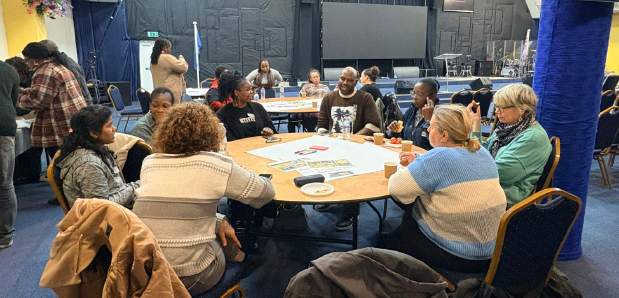
With Neighbourhood Networks there’s an opportunity not just to implement what we’ve discovered, but for residents to be part of the process.
This learning summary is the first in a series of three monthly releases. It captures what we are noticing as the first three networks are moving from conception and ideas into action. Rather than presenting a finished model, it shares live learning from a set of networks and a programme, that is intentionally experimenting, reflecting and adapting as it goes.
What are Neighbourhood Networks?
Each Neighbourhood Network brings together at least three local VCFSE organisations around a shared funding pot, to work alongside residents to explore priorities, test ideas and build momentum for neighbourhood-led activity. Some networks are deepening long-standing relationships, while others are collaborating for the first time. What they share is a commitment to asset-based community development, to learning by doing, and to creating the conditions for residents to move from being consulted to being active participants in shaping their neighbourhoods.
From the outset, Neighbourhood Networks has been designed as a learning-focused programme. Networks are supported to reflect on their practice, share insights with one another, and collectively explore what helps or hinders this way of working.
Early learning from the first three months
Across the initial months, networks have focused on building foundations: establishing trust, building a sense of identity and momentum, and experimenting with different approaches to resident participation.
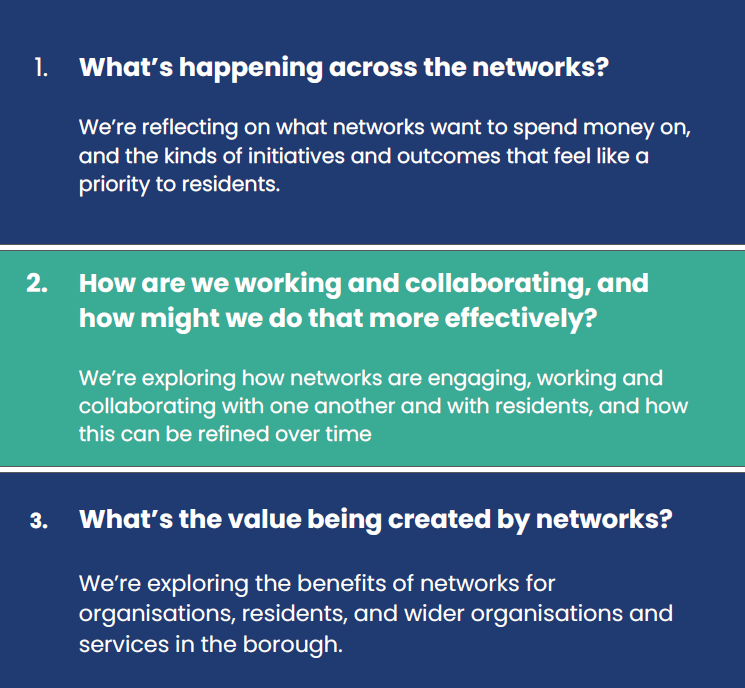
A number of early patterns are emerging. Networks are finding value in taking a gradual, “snowballing” approach to participation, building awareness and energy before moving into more involved decision-making. Different methods of resident engagement are being tested, from panels with direct influence over budgets to hackathons and informal conversations in everyday spaces. These approaches are helping surface shared priorities, particularly around family-friendly activities and, safety.
Collaboration itself is also a key area of learning. New partnerships are bringing a sense of freshness and possibility, alongside moments of discomfort as organisations step beyond familiar ways of working. Networks are actively exploring questions about power, money and decision-making, including when it is helpful to foreground funding and how to recognise and value residents’ time without undermining civic responsibility.
Perhaps most striking is the early sense of renewed community ownership. Networks are seeing curiosity, imagination and ideas emerge when residents are invited into genuine processes of shaping and doing, rather than being asked only for feedback.
What others can learn when setting up their own networks
This Learning Summary offers practical insights for those interested in developing or joining neighbourhood-based networks. It highlights the importance of investing time in relationships, being clear about shared purpose, and creating enough structure to support collaboration while leaving space for communities to lead. It also surfaces common challenges alongside reflections on how these might be navigated.
Above all, the learning points to the value of treating networks as living systems. Progress comes not from getting everything right at the start, but from creating safe conditions for experimentation, reflection and course correction over time.
What’s next for the programme
As Neighbourhood Networks continue to grow, the focus will shift from establishment to deepening practice and connection. Over the coming months, the programme will explore how networks link into and intersect with wider borough initiatives, how learning can stay active, experimental and practical, and how we can take collective responsibility for telling the story of the networks and their impacts.
What we share here is the first installment of many, and we hope that they can build a rich, evolving picture of what it takes to nurture neighbourhood networks that are resilient, inclusive and led by the strengths already present in communities.
We welcome your reflections and questions based on what we’re learning, and we are happy to have conversations to help inform broader asset-based community development initiatives.